Ever wondered why your brain sometimes makes you choose badly? It’s because of cognitive biases. These are mental shortcuts that guide our thoughts and choices. Introduced by Amos Tversky and Daniel Kahneman in 1972, they shape how we see and interact with the world1.

It’s important to understand cognitive biases because they impact many areas of our lives. From social behavior and education to management and finance1. By knowing these mental blind spots, we can make better choices and solve problems more effectively.
Key Takeaways
- Cognitive biases are systematic errors in thinking that affect decisions.
- These biases result from the brain’s attempt to simplify information processing.
- Emotions, motivations, and social pressures influence cognitive biases.
- Biases can lead to irrational behavior and poor decision-making.
- Understanding cognitive biases can improve critical thinking and problem-solving.
Understanding Cognitive Biases: The Brain’s Mental Shortcuts
Cognitive biases are errors in thinking that affect how we make decisions and see things4. They are mental shortcuts that help our brains deal with lots of information every day. Our minds can only handle a few pieces of information at a time, but our brains process a lot more5. This difference leads to biases in our thinking.
Definition and Basic Concepts
Cognitive biases come from problems with memory, attention, and other mental mistakes6. They make it easier for us to process information based on our experiences and likes. There are over 150 types of cognitive biases, and more are found all the time4. These biases can impact many areas of our lives, like how we interact with others, make financial choices, and decide on healthcare.
Historical Background by Tversky and Kahneman
Amos Tversky and Daniel Kahneman introduced cognitive bias in 19726. Their work in cognitive psychology helped us understand how our brains make decisions. Their research has led to many studies in behavioral economics and decision science.
Difference Between Cognitive Biases and Logical Fallacies
Cognitive biases are part of how our brains work, while logical fallacies are mistakes in reasoning. Biases come from trying to simplify complex information. Fallacies happen when arguments are flawed. Knowing the difference helps us think better and make better choices.
| Cognitive Biases | Logical Fallacies |
|---|---|
| Mental shortcuts in information processing | Errors in logical reasoning |
| Unconscious and automatic | Often deliberate or due to lack of knowledge |
| Influenced by emotions and beliefs | Based on flawed arguments |
| Can be mitigated through awareness and practice | Can be avoided through logical analysis |
Knowing about our cognitive biases is the first step to beating them. By seeing different views and thinking about the context, we can make better choices. This helps us be more flexible in our thinking4.
The Science Behind Mental Processing Errors
Cognitive psychology and neuroscience explain how our brains handle information. Mental heuristics, or shortcuts, help us make fast choices but can cause biases. These biases change how we judge and decide things.
The availability heuristic is another shortcut. It makes us judge things based on what’s easy to remember, often making us think things are more likely than they are7. This affects how we see risks and make choices in different situations.
It’s key to understand these mental mistakes to make better choices. By knowing our biases, we can aim for more fair and smart decisions in our daily lives.
| Cognitive Bias | Description | Impact |
|---|---|---|
| Confirmation Bias | Seeking information that aligns with existing beliefs | Distorted conclusions |
| Availability Heuristic | Relying on easily accessible information | Overestimating probabilities |
| Hindsight Bias | Believing events were predictable after they occur | Skewed judgment and analysis |
How Cognitive Biases Influence the Way You Think and Act
Cognitive biases shape our thoughts and actions in ways we often don’t realize. These mental shortcuts impact our daily lives. They affect how we make decisions, form relationships, and perform at work. Let’s explore how these biases play out in different areas of our lives.
Impact on Daily Decision Making
In our day-to-day choices, decision-making biases can lead us astray. The availability heuristic makes us overestimate the likelihood of events we can easily recall. This bias can skew our perception of risks and opportunities.
In a classic experiment, students’ predictions about a Supreme Court nominee’s confirmation changed dramatically after the event. This shows the powerful influence of hindsight bias9.

Effects on Personal Relationships
Cognitive distortions can significantly impact our personal relationships. The false consensus effect leads us to believe our opinions are more widely shared than they actually are. This can create misunderstandings and conflicts with friends and family who hold different views.
Empathetic individuals, like INFJs, might be less susceptible to this bias. This is because they have a strong intuition about others’ feelings.
Influence on Professional Life
In the workplace, cognitive biases can affect our professional performance. The anchoring bias can influence salary negotiations. The first number mentioned serves as a reference point for the entire discussion.
The halo effect might lead managers to overvalue certain traits in employees. This can affect hiring decisions and performance evaluations10.
“Recognizing our cognitive biases is the first step towards making more objective decisions in all areas of life.”
By understanding how these biases operate, we can work towards more balanced thinking and decision-making. It’s a challenging but rewarding journey towards better self-awareness and improved relationships with others.
Common Types of Cognitive Distortions
Cognitive distortions are shortcuts our brains take. They can make us see things not as they are. These patterns can affect how we feel and act. Let’s look at some common ones and how they shape our thoughts.
Confirmation Bias
Confirmation bias means we look for info that backs up what we think. We ignore the opposite. This cognitive distortion can make us stick to wrong ideas. For example, if I think a coworker dislikes me, I might see their neutral actions as mean.
Anchoring Effect
The anchoring effect is when we base our decisions on the first info we get. This can lead to bad choices. For instance, if the first car price is too high, I might not see better deals as good.
Availability Heuristic
The availability heuristic makes us think info that’s easy to find is more important. This can skew our risk views and choices. For example, after hearing about a plane crash, I might think flying is riskier than driving, even though it’s safer.
Halo Effect
The halo effect makes us judge someone’s traits based on our overall impression. This can lead to unfair judgments. If I find someone attractive, I might think they’re smart or kind without proof.
| Cognitive Distortion | Description | Example |
|---|---|---|
| Confirmation Bias | Seeking information that supports existing beliefs | Only reading news articles that align with political views |
| Anchoring Effect | Relying too heavily on first piece of information | Judging all subsequent job offers based on first salary offer |
| Availability Heuristic | Overestimating importance of readily available information | Fearing shark attacks after watching Jaws |
| Halo Effect | Overall impression influencing perception of specific traits | Assuming a well-dressed person is also intelligent |
Cognitive distortions can be treated with cognitive behavioral therapy (CBT)11. CBT helps change negative thought patterns. By spotting and challenging these biases, we can get better at thinking and making choices.
The Role of Memory in Cognitive Biases
Memory shapes our thoughts and actions, but it’s not always reliable. Memory biases can change how we remember events and make choices. These biases are part of many cognitive biases that affect our thinking12.
The misinformation effect is a common memory bias. It happens when new information changes our memory of an event. For example, a study found over half of adults couldn’t recall ads from the past month13. This shows how easily our memories can be influenced or forgotten.

Hindsight bias is another interesting bias. It makes us think we could have predicted an outcome after learning about it. It’s linked to the egocentric bias, which makes us think we did better than we did12.
False memories are also part of memory biases. Up to 25% of college students get confused about real versus dreamed events. These errors happen more in kids and older adults than in younger people13.
| Memory Bias | Description | Impact |
|---|---|---|
| Misinformation Effect | Post-event information alters original memory | Distorts recall of events |
| Hindsight Bias | “I knew it all along” phenomenon | Overconfidence in predictive abilities |
| False Memories | Creation of memories for events that didn’t occur | Confusion between real and imagined events |
It’s important to understand these memory biases for accurate recall and critical thinking. They can make us see ourselves and others in a distorted way. By recognizing these biases, we can make better decisions and improve our memory accuracy14.
Social Influences and Group Decision Making
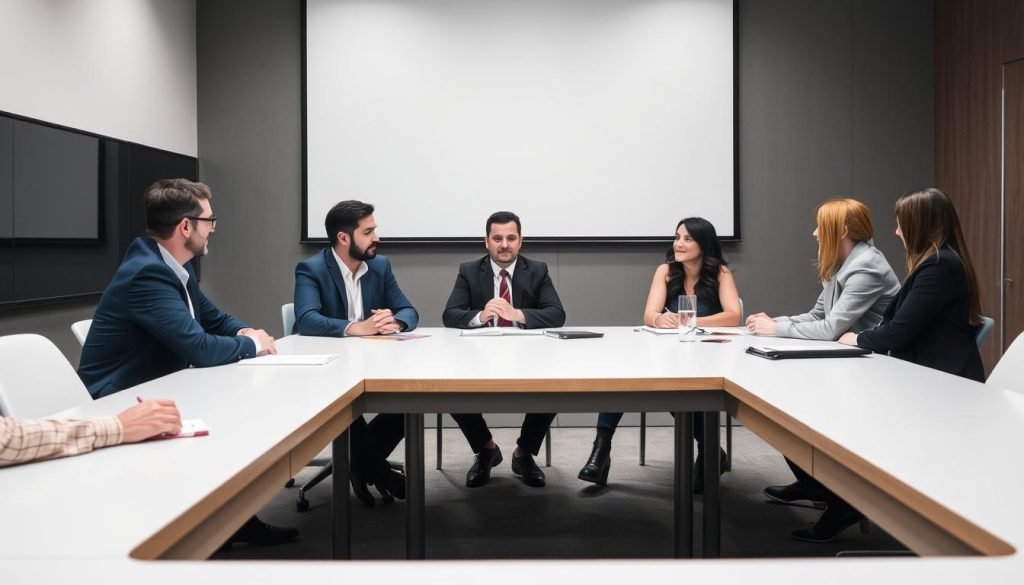
Group dynamics shape our thoughts and actions. Social influence and collective decision-making often lead to unexpected outcomes. Let’s explore how these forces impact our choices and behaviors.
Groupthink Phenomenon
Groupthink is when the desire for harmony in a group overrides rational decision-making. In organizations, this can lead to a 50% increase in trust and credibility within the group compared to outsiders15. This bias often results in poor choices and stifled creativity.
Social Pressure Effects
Social pressure can significantly impact our behavior. The bandwagon effect shows that people are 40% more likely to adopt a belief or behavior if they perceive others doing the same15. This tendency can lead to conformity, even when faced with incorrect information.
Collective Decision Biases
Group decision-making is often subject to biases. The false consensus effect causes groups to overestimate how much others agree with them by an average of 20%15. This can lead to misguided decisions based on assumed agreement rather than actual consensus.
| Bias | Effect | Impact |
|---|---|---|
| Groupthink | 50% increase in in-group trust | Stifled creativity, poor decisions |
| Bandwagon Effect | 40% increase in adoption rate | Conformity, lack of individual thought |
| False Consensus Effect | 20% overestimation of agreement | Misguided group decisions |
Understanding these social influences and biases is crucial for making better group decisions. By recognizing these tendencies, we can work towards more balanced and effective collective decision-making processes.
Emotional Components of Cognitive Biases
Emotions greatly affect our thoughts and choices. The mix of emotions and biases shows how complex our minds are. Knowing this helps us grow emotionally and make better choices.

Mood-congruent memory bias shows how our mood affects what we remember. When we’re happy, we remember happy times more. This can change how we see the past and affect our future choices.
Emotional reasoning makes us think based on feelings, not facts. This can lead to irrational beliefs and actions. It’s important to know when we’re doing this to improve our decision-making.
| Emotional Component | Effect on Cognition | Potential Impact |
|---|---|---|
| Affect Heuristic | Guides judgments based on emotional responses | Can lead to biased risk assessment |
| Mood-Congruent Memory Bias | Influences memory recall based on current mood | May distort perception of past events |
| Emotional Reasoning | Draws conclusions based on feelings | Can result in irrational beliefs and behaviors |
By growing our emotional intelligence, we can handle these biases better. This means knowing our feelings, seeing how they affect our thinking, and balancing emotions with reason in our choices.
The Impact of Cognitive Biases on Critical Thinking
Cognitive biases are big challenges for critical thinking and making good decisions. They can lead us away from the truth. Research shows there are over 150 types of cognitive biases since the 1970s. They affect our choices in many areas of life4.
Barriers to Rational Decision Making
Effects on Problem Solving
Confirmation bias is bad for solving problems. We look for info that agrees with us, missing important data. This can stop us from thinking clearly and finding new solutions4.

Influence on Analysis and Judgment
“Cognitive flexibility is key to overcoming biases, allowing us to consider different perspectives and contextual information.”
To get better at thinking and making decisions, we need to know about these biases. We should try to be open-minded and seek out different experiences. This way, we can think more clearly and make better choices4.
| Bias | Impact on Critical Thinking | Mitigation Strategy |
|---|---|---|
| Overconfidence Bias | Leads to flawed judgments across professions | Seek feedback and challenge assumptions |
| Confirmation Bias | Limits consideration of alternative solutions | Actively seek opposing viewpoints |
| Anchoring Effect | Skews analysis based on initial information | Consider multiple reference points |
| Halo Effect | Influences judgment based on overall impressions | Evaluate specific traits independently |
Recognizing Your Own Cognitive Biases
It’s hard to spot our own cognitive biases, but it’s key for growth. I often fall into mental traps without knowing it. For example, I might stick to opinions that match what I already believe, ignoring other views.
This is called confirmation bias and can affect how we invest19.
There are over 100 cognitive biases that shape our decisions19. For instance, the status quo bias might stop me from updating my investments, even when it’s smart to do so19. Learning about these biases is crucial for growth and better choices.
“The first step in overcoming cognitive biases is recognizing their existence in our thought processes.”
| Cognitive Bias | Impact on Decision-Making | Strategy to Overcome |
|---|---|---|
| Confirmation Bias | Ignoring conflicting information | Actively seek opposing viewpoints |
| Loss Aversion | Holding onto losing assets | Set predefined exit strategies |
| Anchoring Bias | Not adjusting estimates with new information | Regularly reassess and update assumptions |
Strategies for Overcoming Mental Blind Spots
Beating cognitive biases needs a plan. Self-awareness and debiasing techniques help a lot. Let’s look at some good ways to fight mental blind spots.
Self-Awareness Techniques
Knowing yourself is key to spotting biases. Mindfulness meditation helps resist quick thoughts and notice biases21. Keeping a bias journal tracks my thoughts and mistakes.
Practical Debiasing Methods
Decision-Making Tools
Tools for making decisions help avoid biases. I use pro-con lists, decision matrices, and scenario planning. These methods help me see all sides and lessen bias.
The Role of Cognitive Biases in Modern Society
In today’s world, our brains play tricks on us. These tricks affect how we see things and make choices. Social media bias, fake news, and societal polarization are all linked to these tricks.
These biases also make society more divided. We stick to our first impressions, making it hard to change our minds22. This makes it hard for different groups to come together.
“Understanding our cognitive biases is crucial for developing media literacy and fostering more informed public discourse.”
Knowing about these biases is the first step to fighting them. By recognizing our mental tricks, we can seek out different views and question our own beliefs. This is important for understanding the world around us.
| Cognitive Bias | Impact on Modern Society |
|---|---|
| Confirmation Bias | Creation of information bubbles |
| Availability Heuristic | Overestimation of risks from media coverage |
| Anchoring Bias | Resistance to changing views |
| Overgeneralization | Spread of misinformation |
Professional Implications of Cognitive Biases
Cognitive biases greatly affect how we make decisions at work. They can sway hiring, leadership, and business strategies. It’s key to know how these biases work to make fair and effective workplaces.
Studies reveal overconfidence bias is common in professional decisions. It makes people think they can do more than they can. This can lead to risky choices and bad leadership.
Hiring is also hit by biases. The halo effect makes us judge people based on first impressions. This can lead to choosing the wrong person for the job.
In finance, anchoring bias is big. It makes people stick to the first piece of information they get. This can cause bad deals and poor use of resources.
Leadership biases, like the false consensus effect, can mess up team work. Leaders might think everyone agrees with them. This can cause goals and strategies to not match up.
| Bias Type | Impact on Business | Mitigation Strategy |
|---|---|---|
| Overconfidence Bias | Risky decision-making | Implement peer review processes |
| Halo Effect | Unfair hiring practices | Use structured interviews |
| Anchoring Bias | Poor financial choices | Seek multiple data points |
| False Consensus Effect | Misaligned team goals | Encourage diverse viewpoints |
To fight these biases, companies can train on bias awareness. They can also use clear decision-making steps. By tackling these mental tricks, businesses can work better and more fairly.
Building Better Mental Models
Building better mental models helps us beat cognitive biases and make better choices. Mental models are like frameworks that help us understand the world. They deeply shape how we think. In business, knowing about Comparative Advantage and Supply and Demand is key to understanding markets23.
Developing Critical Thinking Skills
Creating Objective Decision Frameworks
Creating fair decision frameworks means using many sources and tools. I use Normal Distribution and Power Laws for numbers23. I also learn from observing behavior, not just what people say24. I apply Occam’s Razor and Hanlon’s Razor to make smart choices25.
Implementing Bias-Check Systems
Source Links
- How Cognitive Biases Influence the Way You Think and Act – https://www.verywellmind.com/what-is-a-cognitive-bias-2794963
- Beware the Dangers of Cognitive Bias – National Commission on Correctional Health Care – https://www.ncchc.org/beware-the-dangers-of-cognitive-bias/
- 16 cognitive biases that can kill your decision making – https://www.boardofinnovation.com/blog/16-cognitive-biases-that-kill-innovative-thinking/
- What Cognitive Bias Is and How To Overcome It – https://health.clevelandclinic.org/cognitive-bias
- What Is Cognitive Bias And How Does It Affect Our Lives? | UT Permian Basin Online – https://online.utpb.edu/about-us/articles/psychology/what-is-cognitive-bias-and-how-does-it-affect-our-lives
- What is Cognitive Bias? – https://www.techtarget.com/searchenterpriseai/definition/cognitive-bias
- Cognitive biases 101 – Humantold – https://humantold.com/blog/cognitive-biases-101/
- Cognitive bias and how to improve sustainable decision making – https://pmc.ncbi.nlm.nih.gov/articles/PMC10071311/
- 13 Types of Common Cognitive Biases That Might Be Impairing Your Judgment – https://www.verywellmind.com/cognitive-biases-distort-thinking-2794763
- How Cognitive Bias Affects Your Business – https://www.investopedia.com/articles/investing/022015/how-cognitive-bias-affects-your-business.asp
- Cognitive distortions: What they are, types, and how to manage – https://www.medicalnewstoday.com/articles/cognitive-distortions
- Memory Cognitive Biases In The World of Work – The World of Work Project – https://worldofwork.io/2019/06/cognitive-biases-memory/
- Memory Failure and Cognitive Biases – https://opentextbc.ca/introconsumerbehaviour/chapter/memory-failure-and-cognitive-biases/
- How Memory Bias Affects Your Memories – https://theknowledge.io/memory-bias/
- Social Cognitive Biases In The World of Work – The World of Work Project – https://worldofwork.io/2019/06/cognitive-biases-social/
- What They Are and How They Affect People – Effectiviology – https://effectiviology.com/cognitive-biases/
- List of Cognitive Biases and Heuristics – The Decision Lab – https://thedecisionlab.com/biases
- The Impact of Cognitive Biases on Professionals’ Decision-Making: A Review of Four Occupational Areas – https://pmc.ncbi.nlm.nih.gov/articles/PMC8763848/
- Recognizing Your Behavioral Biases | PIMCO – https://www.pimco.com/eu/en/resources/education/behavioral-science/recognizing-your-behavioral-biases
- Outsmart Your Own Biases – https://hbr.org/2015/05/outsmart-your-own-biases
- 12 Strategies To Defeat Cognitive Biases And Boost Your Bottom Line – https://www.forbes.com/sites/glebtsipursky/2023/04/15/12-strategies-to-defeat-cognitive-biases-and-boost-your-bottom-line/
- Cognitive bias | Description & Examples | Britannica – https://www.britannica.com/science/cognitive-bias
- Mental Models: Learn How to Think Better and Gain a Mental Edge – https://jamesclear.com/mental-models
- Decision Making and Mental Models – Will Robbins – https://willrobbins.org/decision-making-and-mental-models/
- Mental Models I Find Repeatedly Useful – https://medium.com/@yegg/mental-models-i-find-repeatedly-useful-936f1cc405d

Amanda Cassey is an INTJ entrepreneur and former psychology researcher who writes about the nuances of the INTJ personality type on Psyche Central. Leveraging her analytical mindset and commitment to personal growth, she explores the cognitive processes, strengths, and challenges of INTJs. Her insightful content aims to foster self-awareness and provide practical strategies for fellow INTJs to thrive.
Leave a Reply